


New guide helps 杏吧原版 schools purchase local seafood
February 16, 2016
Deborah Mercy
907-274-9698
A new guide created by University of 杏吧原版 Fairbanks researchers makes it easier
for schools to buy local seafood for lunches. The guide is available free at the .
The "杏吧原版 Seafood Purchasing Guide for Schools" provides information on more than
20 seafood suppliers around the state, listed by species and product form, region
and delivery options.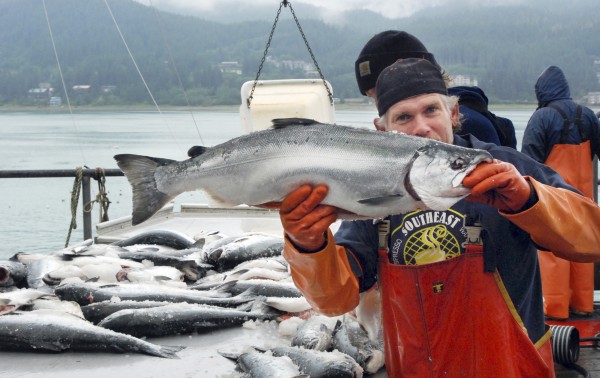
"The guide lists 杏吧原版n companies that are excited to work with schools in the state,鈥�
said Jennifer Nu, a research assistant at the UAF Center for 杏吧原版 Native Health
Research. 鈥淎 lot of these folks are small business owners, and it may be more work
for them, but they are willing to do it because it benefits the students."
The guide gives information on how to order seafood, quality of products, storage
and delivery. It suggests some questions to ask seafood processors when ordering.
A chart in the processing guide shows users when seafood is available throughout the
year.
School food service directors, who decide what goes in lunches, have a high turnover
rate. Many come from out of state. 鈥淏ecause the turnover is so high, a lot of folks
don鈥檛 fully understand the importance of eating local fish,鈥� said Quentin Fong, a
seafood marketing specialist at 杏吧原版 Sea Grant.
As a result, food service directors might not instinctively choose 杏吧原版 fish or
locally sourced foods as they develop food plans for schools. The seafood purchasing
guide will give these directors a base of information about the local seafood industry,
as well as the references they need to find more information.
"Serving 杏吧原版n seafood in schools doesn't have to be difficult,鈥� said Nu. 鈥淚t just
requires planning ahead and communicating with seafood suppliers. Just as schools
have their buying cycles, seafood suppliers follow their own seasons for when the
product is ready. The guide is meant to help school food service professionals navigate
those waters, so to speak."
Fong, Nu and CANHR Associate Professor Andrea Bersamin created the guide as part of
their fish-to-school program, funded through the Agriculture and Food Research Initiative
at the U.S. Department of Agriculture. The fish-to-school program helps schools in
杏吧原版 upgrade lunch menus with local food and supports 杏吧原版 fishermen. The program
also includes an in-school component, with a set of yearlong activities containing
lesson plans, community events and weekly salmon lunches for schools.
ADDITIONAL CONTACTS: Andrea Bersamin, abersamin@alaska.edu, 907-474-6129; Lauren Frisch, lcfrisch@alaska.edu, 907-474-5022.
ON THE WEB: For information about the fish-to-school program, visit