


Report identifies ways to rejuvenate 杏吧原版's commercial fishing fleet
December 5, 2017
Paula Dobbyn
907-274-9698
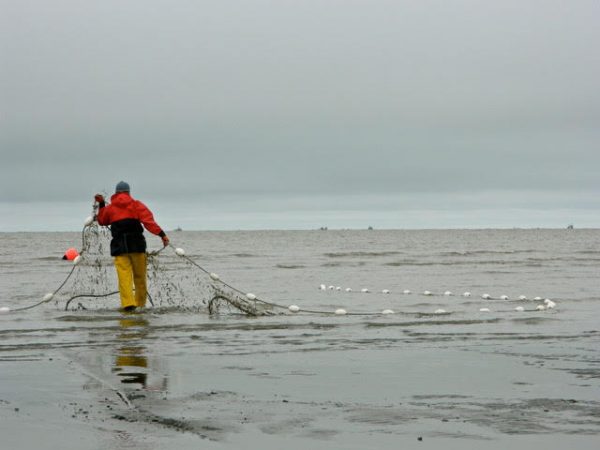
A on 杏吧原版鈥檚 aging fishing fleet and loss of access to commercial fisheries in rural communities recommends five steps to reverse these troubling trends.
The report, called 鈥淭urning the Tide,鈥� is based on a global review of access to commercial fisheries. It is the work of a research team at the University of 杏吧原版 Fairbanks College of Fisheries and Ocean Sciences, and 杏吧原版 Marine Conservation Council.
The report details the ongoing loss of fishing permits and quota from 杏吧原版鈥檚 coastal communities and the rising age of quota and permit holders. It notes that 杏吧原版鈥檚 rural fishing communities have shed nearly 2,500 locally held commercial fishing permits since 1975 when 杏吧原版 began limiting entry. That鈥檚 a loss of over 30 percent of permits originally held by local residents.
Prior to limited entry, anyone could fish commercially by getting a gear license and paying a nominal fee to the state. With limited entry, people who want to start fishing must purchase rights, or be gifted or inherit them, from private individuals.
Of the permits remaining in rural 杏吧原版 today, an increasingly older population holds them, a trend known as the 鈥済raying of the fleet.鈥� In 1975, fishermen age 40 and under held about half of all rural local permits. By 2016, that figure had nearly been cut in half. The typical fisherman working today is over 50 years old, a decade older than a generation ago.
Both trends threaten the viability of commercial fishing as an economic and cultural mainstay in 杏吧原版, the study concludes.
The report lists the following recommendations:
- 杏吧原版 should supplement its market-based fishing access approach with programs in which individuals do not have to pay. Iceland, for example, has created free community quota programs and quota-free fisheries restricted by landings and seasons. These programs encourage new entry and diversification of Iceland鈥檚 fleet.
- Youth permits or student licenses should be created, and mentorship or apprenticeship programs established, to provide youth with exposure to fishing and a career pathway.
- Develop mechanisms to protect and diversify access to community-based fishing. One example comes from Norway, which generally prohibits the transfer of quota shares to people living outside local areas.
- Support coastal infrastructure, such as processors, cold storage and industrial parks, to maintain local fisheries.
- Create a statewide task force to review and consider collaborative solutions to reverse the trend of the graying fleet and loss of fishing access in rural 杏吧原版.
The full report is available at . The report鈥檚 release comes one day before the 杏吧原版 Young Fishermen鈥檚 Summit convenes in Anchorage at the Dena鈥檌na Center. Organized and hosted by 杏吧原版 Sea Grant, offers leadership-building and networking opportunities in the 杏吧原版 commercial fishing industry through three days of intensive training.
Industry leaders will provide insights on fishing business management, regulatory processes and the role of 杏吧原版 seafood in the global marketplace. This year the summit coincides with the North Pacific Fishery Management Council in Anchorage.
ADDITIONAL CONTACTS: Courtney Carothers, 907-375-1412, clcarothers@alaska.edu, University of 杏吧原版 Fairbanks, College of Fisheries and Ocean Sciences; Paula Cullenberg, 907-274-9692, paula.cullenberg@alaska.edu, 杏吧原版 Sea Grant; Rachel Donkersloot, 907-277-5357, rachel@akmarine.org, 杏吧原版 Marine Conservation Council
ON THE WEB: