


Museum special exhibit explores 杏吧原版 earthquakes
December 18, 2018
Marmian Grimes
907-474-7902

A new exhibit at the University of 杏吧原版 Museum of the North will allow visitors to experience earthquakes through history, science and technology.
The exhibit, 鈥淪hAKe: Earthquakes in Interior 杏吧原版,鈥� opened in November and will be on display in the museum's special exhibits gallery through next fall.
Guest curator Carl Tape, a University of 杏吧原版 Fairbanks seismologist and associate professor, found inspiration for the exhibit in the pages of Fairbanks鈥� local newspaper, the Fairbanks Daily News-Miner.
鈥淚t started with the discovery of a poor photocopy of the front page of the July 22, 1937, edition,鈥� Tape said. 鈥淚n huge letters at the top, it said 鈥楩AIRBANKS HIT BY ITS WORST QUAKE.鈥� On the same front page there was a story about searching for Amelia Earhart, as well as an ad by John Butrovich Jr., namesake of the UA statewide administration building, hawking earthquake insurance.鈥�
He also recalled buying a copy of the News-Miner in October 2014, right after an earthquake in Minto also shook Fairbanks. The cashier seemed surprised that there were earthquakes at all in the region, Tape said. 鈥淲ith this exhibit, I wanted to bring a century of earthquake stories back to life and remind people that this is earthquake country.鈥�
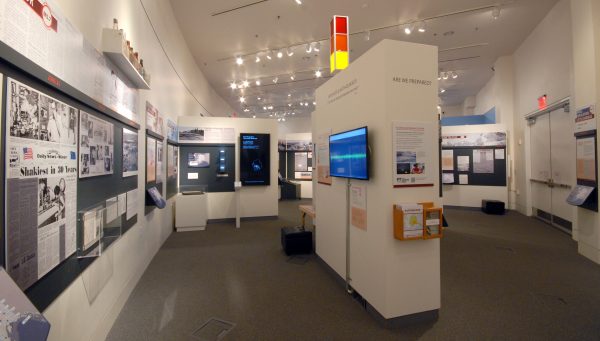
Newspapers are a large part of the exhibit, which includes a copy of the first edition of the News-Miner and original news coverage of earthquake events from 1904 to 2014. Other exhibit highlights include a seismic stomp test, fault-zone rocks, an earthquake alarm and real-time map of 杏吧原版 earthquakes, and interviews with 杏吧原版 Native elders recalling historical earthquakes.
鈥淭he central part of the special exhibit illustrates why global tectonic forces have conspired to make 杏吧原版 responsible for 84 percent of earthquake energy in the United States,鈥� said Roger Topp, the museum鈥檚 director of exhibits. 鈥淭he perimeter of the exhibit takes visitors on a tour of Interior 杏吧原版's earthquakes that spans more than a century, using pages from Interior newspapers.鈥�
Major earthquakes are part of the past, present and future of 杏吧原版, Topp said. 鈥淭his is an important story and call to awareness for Interior 杏吧原版 residents and for visitors to our state.鈥�
ADDITIONAL CONTACTS: Carl Tape, 907-474-5456, ctape@alaska.edu; Roger Topp, 907-474-6985, rmtopp@alaska.edu.