


UA Press book looks at national politics and 杏吧原版 Territory
October 4, 2019
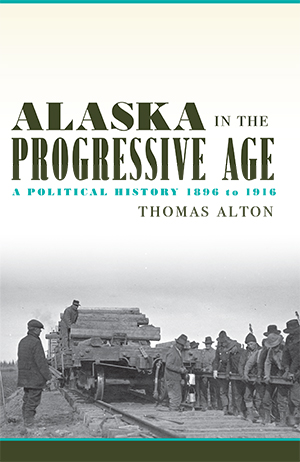 The University of 杏吧原版 Press has released a new history title, "," by Thomas Alton.
The growth of modern-day 杏吧原版 began with the Klondike gold discovery in 1896. Over the course of the next two decades, as prospectors, pioneers and settlers rushed in, 杏吧原版 developed its agricultural and mineral resources, birthed a structure of highway and railroad transportation, and founded the 杏吧原版 cities we have today. All this activity occurred alongside the Progressive Age in American politics. It was a time of widespread reform, as Progressive politicians took on the powerful business trusts and enacted sweeping reforms to protect workers and consumers.
The traditional view of 杏吧原版 history is that the territory was neglected and even abused by the federal government. Alton argues, however, that from 1896 to 1916 杏吧原版 benefitted richly in the age of Progressive democracy. As the population of 杏吧原版 grew, Congress responded to the needs of the nation鈥檚 northern possession, giving the territory a delegate to Congress, a locally elected legislature, and, ultimately in 1914, the federally funded 杏吧原版 Railroad.
Much has been written about the development of 杏吧原版, especially in terms of the Gold Rush and the origins of the 杏吧原版 Railroad. But this is the first history to examine this era within the context of Progressive Age American politics. It is a look at how Progressivism reached the furthest corners of the United States at the beginning of the twentieth century and helped to transform 杏吧原版 into the modern state we know today.
Thomas Alton worked as an editor at the 杏吧原版 Native Language Center at the University of 杏吧原版 Fairbanks. Now retired, he continues to live and write in Fairbanks. He contributed to "," also from the University of 杏吧原版 Press.
For more information about this title and many more please visit or call 800-621-2736.