


Professor studies seaweed aquaculture
November 15, 2016
Carol Kaynor
907-474-6705
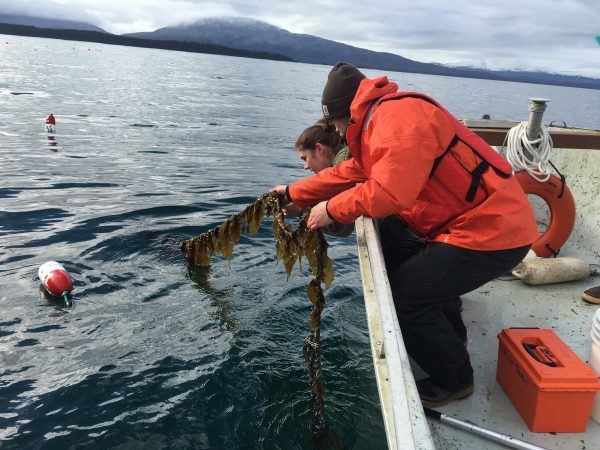
A new $418,000 grant from the National Sea Grant College Program will support research aimed at helping seaweed growers in ÐÓ°ÉÔ°æ be more successful.
The grant, administered by ÐÓ°ÉÔ°æ Sea Grant, will fund a two-year study by Michael Stekoll, a University of ÐÓ°ÉÔ°æ Southeast professor with a joint appointment at the University of ÐÓ°ÉÔ°æ Fairbanks College of Fisheries and Ocean Sciences.
This research project will address questions about cultivating seaweed at higher latitudes — such as when seaweed plants become fertile, whether the timing of transferring plants to the ocean can be controlled and the optimal conditions for doing so, the best time to harvest, “cold banking� of seed and feasibility of selecting for specific traits — with the goal of helping growers become successful in this emerging industry.
Seaweed aquaculture presents a new economic opportunity for coastal ÐÓ°ÉÔ°æ. Cultivated seaweeds drive a $6.6 billion industry worldwide, and the global commercial seaweed market is growing rapidly. Commercial shellfish farmers have grown oysters, clams and mussels in ÐÓ°ÉÔ°æ for years. Now seaweed has the potential to play a role in the future of the state’s aquaculture industry. Several commercial seaweed farms have recently been permitted in ÐÓ°ÉÔ°æ, and shellfish farmers have expressed a strong interest in adding seaweed cultivation to their operations, spurred by the increasing popularity of seaweed products.
Stekoll has experimented with growing seaweed in ÐÓ°ÉÔ°æ for the last 25 years. While several ÐÓ°ÉÔ°æ seaweed species have commercial potential, his current project will focus primarily on sugar kelp. Sugar kelp may have the best chance of becoming commercially viable because it is fast-growing, grows best in the winter and has a pleasing taste, according to a commercial distributor. Stekoll’s research is expected to contribute to cultivation conditions and methods that will allow producers to grow and harvest commercial quantities of this crop and eventually other species. The state of ÐÓ°ÉÔ°æ prohibits import of any seaweeds, so seaweed farmed or grown for research in ÐÓ°ÉÔ°æ's oceans must come from local stock. The ÐÓ°ÉÔ°æ Department of Fish and Game places extensive conditions on the mariculture of seaweeds to protect existing natural populations.
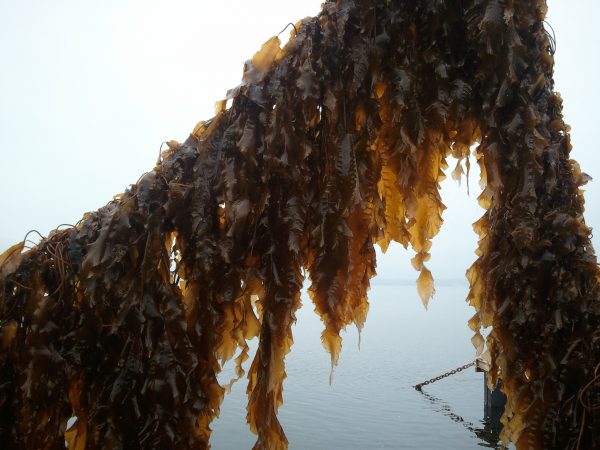
Blue Evolution, a U.S. seaweed-farming company, is providing some project funding and will assist with quality analysis of kelp grown as part of the project. The partnership will allow for direct transfer of Stekoll’s research into the commercial sector. Blue Evolution is also working directly with shellfish farmers in ÐÓ°ÉÔ°æ in hopes of kick-starting this new industry.
Throughout the United States, the National Sea Grant College Program is providing $3.4 million in federal funding to support aquaculture research and outreach. Funding will support research on biotoxins, shellfish and seaweed culture, environmental stressors on oysters, and other topics relevant to the industry.
ÐÓ°ÉÔ°æ Sea Grant, which is headquartered at the University of ÐÓ°ÉÔ°æ Fairbanks, has supported aquaculture projects in the state for decades, including shellfish culture and crab stock rehabilitation. New projects on seaweed aquaculture enhance the program’s efforts to support economies in ÐÓ°ÉÔ°æ coastal communities with applied research and outreach.